


Journal of Emerging Markets and Management →
Emerging Markets and Management Volume 02 | Issue 03 | October 2026 From "World Factory" to "Innovation Engine":How Do Local Firms in Emerging Markets Stage Their Comeback?— A Featured Reading G
Journal of Emerging Markets and Management (JEMM) is a peer-reviewed, open-access journal dedicated to advancing research on business, finance, and management in emerging markets. JEMM aims to bridge academia and industry, providing insights into economic development, corporate strategies, and policy challenges in developing economies. View full aims and scope
Emerging Markets and Management Volume 02 | Issue 03 | October 2026 From "World Factory" to "Innovation Engine":How Do Local Firms in Emerging Markets Stage Their Comeback?— A Featured Reading G
— On the Value, Significance, and Contribution to Journal Development of Publishing This Piece Journal of Emerging Markets and Management (JEMM) · Selected Reading · Editorial Commentary Open-access i
—This issue features a scoping review of digital commerce in Ghana, closely aligned with our editorial mission and highlighting the distinctive scholarly value of emerging-market management research.
Journal of Emerging Markets and Management · 1–14 · 10.63385/jemm.v2i3.101045
The research paper discusses the role of digitisation as an enabler of self-employment and socio-economic inclusion in the state of Kerala, which is economically and socio-culturally stratified. In particular, it examines how digitisation is a structural equaliser by altering access to entrepreneurship along gender, caste, and r
Journal of Emerging Markets and Management · 15–24 · 10.63385/jemm.v2i3.101122
This paper examined the impact of public debt and fiscal policy on Nigeria’s economic growth using the Autoregressive Distributed Lag (ARDL) model. The annual time-series data from 1981 to 2023 were obtained from the Central Bank of Nigeria Statistical Bulletin and the World Bank archives. The study analyzed the long-run and sho
Journal of Emerging Markets and Management · 25–39 · 10.63385/jemm.v2i3.101164
This research examines the sectoral structure of employment in Nigeria and the way that structure shapes spatial constraints on the economy’s resilience to climate and market crises. Rather than treating social capital as a measured variable, the study frames it as contextual background and instead analyses observable sectoral e
Journal of Emerging Markets and Management · 40–64 · 10.63385/jemm.v2i3.101095
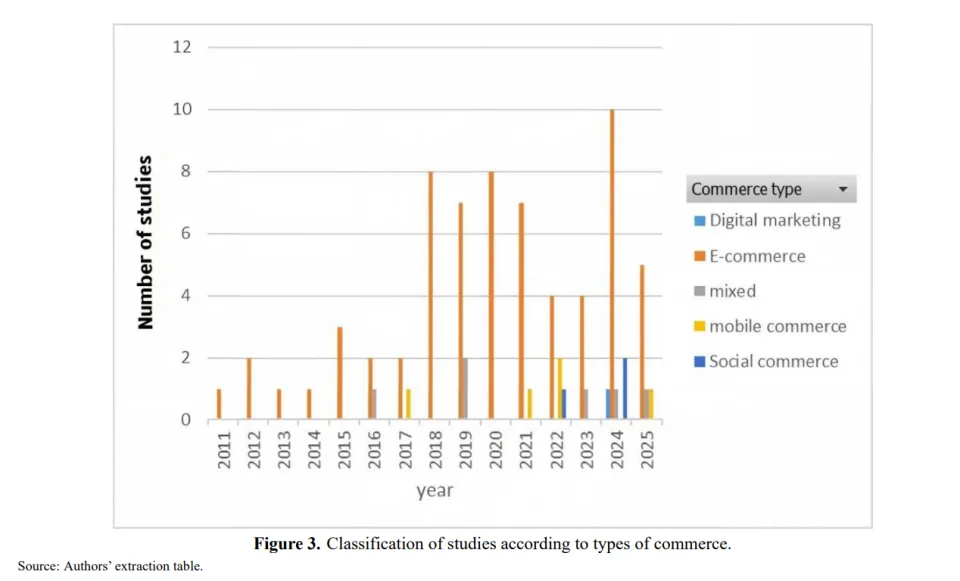
The digital economy in Ghana has grown exponentially over the last decade, driven by rising rates of mobile and internet penetration, the growth of fintech and mobile money services, the unexpected pandemic, and the integration of social media into the Ghanaian economic landscape. Nevertheless, scientific evidence that synthesis
Journal of Emerging Markets and Management · 65–83 · 10.63385/jemm.v2i3.101039
In the globalized world, there is a closed relationship between foreign capital inflows (CI) and financial development (FD) of a country. Therefore, this study aims to investigate the relationship between FD and CI across the Southern and Eastern Mediterranean countries (MEDA region), covering the period 2000–2019, since MEDA tr
Journal of Emerging Markets and Management · 84–95 · 10.63385/jemm.v2i3.100695
In 1980, a young economist called Micheal E. Porter made a revolution in the field of Industrial Organization by publishing his article on the attractiveness of industries and the five forces that influence them. Although the model still has some validity, it has heavily been criticized as obsolete since the introduction of inte
Journal of Emerging Markets and Management · 96–113 · 10.63385/jemm.v2i3.101059
This study presents a rigorous quantitative investigation of the determinants of customer satisfaction in the Ethiopian insurance sector, grounded in the Service Quality (SERVQUAL) model. The research analyzes empirical data using Partial Least Squares Structural Equation Modeling (PLS-SEM) to evaluate information gathered from
Journal of Emerging Markets and Management · 114–131 · 10.63385/jemm.v2i3.102684
This study develops a grounded theory of digital banking service quality by examining how Small and Medium-sized Enterprises (SMEs) in Nigeria evaluate digital banking services under conditions of institutional uncertainty. Using a Straussian grounded theory approach, data were collected through 54 in-depth episodic narrative in
Explore keywords from this journal’s published articles.