
 Open Access

News & Announcements
Using Online Video Simulation to Teach Consultation Skills: A Professional Development Approach for Student Teachers
13 March 2026
Innovations in Pedagogy and Technology — Article Preview
Using Online Video Simulation to Teach Consultation Skills:
A Professional Development Approach for Student Teachers
————————————————————————————————————————
Article Title: Using Online Video Simulation to Teach Consultation Skills: A Professional Development Approach for Student Teachers
Authors: Cheng-Hao Sung (Center for Teacher Education, National Sun Yat-sen University), Hsien-Ming Lin (Center for Teacher Education, National Pingtung University), Tzu-Hsiang Lin (Fengxiang Junior High School, Kaohsiung City), Chia-Chun Wu (Department of Psychology and Service, National Defense University)
Published in: Innovations in Pedagogy and Technology, Volume 2, Issue 2, pp. 115–135
DOI: https://doi.org/10.63385/ipt.v2i2.357
Publisher: Nature and Information Engineering Publishing Sdn. Bhd. (affiliated with Zhongyu International Education Centre)
Editor-in-Chief: Prof. Dr. Arumugam Raman, Universiti Utara Malaysia
————————————————————————————————————————
I. Introduction
In the wave of digital transformation in education, how to effectively enhance the professional practical competencies of pre-service teachers has become a core challenge urgently requiring resolution in the field of teacher education worldwide. The research paper co-authored by Cheng-Hao Sung and three other scholars is forthcoming in Volume 2, Issue 2 of Innovations in Pedagogy and Technology. This study focuses on 44 pre-service teachers majoring in psychological counseling at universities in Taiwan, innovatively introducing an online video simulation training model and systematically examining its effectiveness in enhancing pre-service teachers' consultation skills, thereby providing a highly valuable empirical study for digital teaching practices in teacher education.
II. Key Issues Raised in This Article
(1) Innovative Application of Virtual Simulation Technology in Teacher Education
The "online video simulation training" model proposed in this article represents a significant breakthrough over the traditional teacher training model of "theoretical instruction + internship observation." The study introduces clinical simulation—a well-established method from medical education—into the field of teacher education, building a bridge between theoretical learning and professional practice through the construction of realistic teaching scenario videos, interactive decision-making tasks, and structured reflective discussions. This cross-disciplinary method transfer strategy responds to the core concern in contemporary educational technology scholarship regarding "how high-fidelity simulation environments can empower professional growth among educators."
(2) Systematic Development of Pre-Service Teachers' Consultation Competency
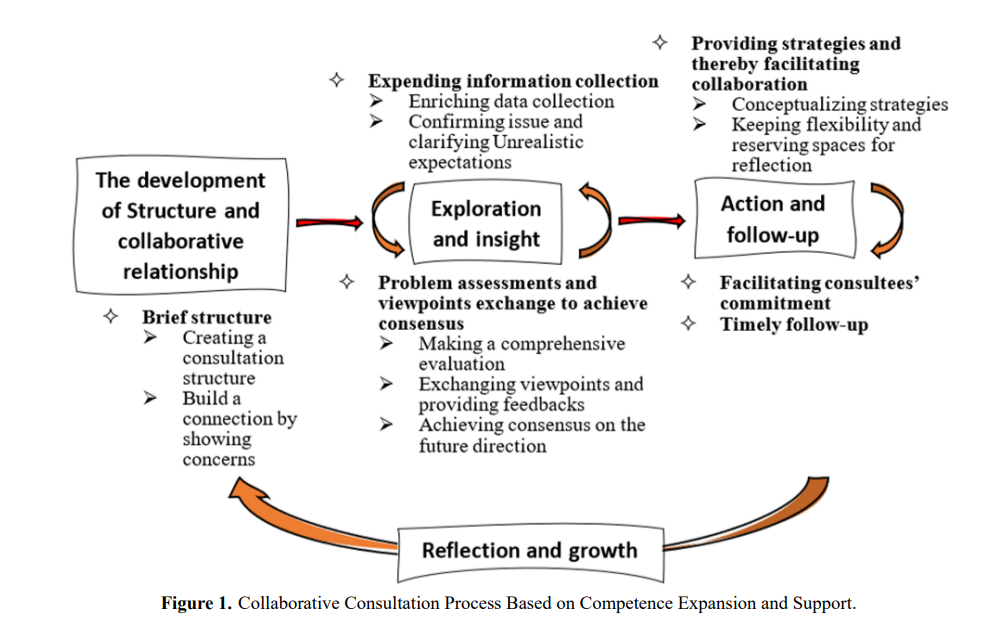
As the needs of students in schools become increasingly complex, teachers serve not only as transmitters of knowledge but also bear important responsibilities for effective communication and collaboration with students' parents, school counselors, and other support personnel. This article identifies the weaknesses in pre-service teachers' consultation skills training and proposes a structured simulation training program designed to systematically enhance participants' self-efficacy in identifying core issues, employing appropriate communication strategies, and engaging in collaborative problem-solving.
(3) Flexibility and Safety Advantages of Digital Learning Environments
This article emphasizes the unique advantages of online simulation training—allowing learners to engage in flexible, repetitive practice in a low-risk environment, thereby achieving iterative skill development. These findings carry important implications for the design of remote teacher education models in the post-pandemic era.
III. Deep Alignment with the Journal's Academic Positioning
The journal focuses on pedagogical innovation and educational technology, encompassing the frontier intersections of pedagogy, educational technology, curriculum instruction, digital learning, educational assessment, and AI applications in education. This article demonstrates multi-dimensional alignment with the journal's positioning:
(1) Pedagogical Innovation Dimension
The video simulation training method proposed in this article is essentially a convergent innovation of "experiential learning" and "situated learning." Grounded in Kolb's experiential learning theory and Bandura's self-efficacy theory, the study transforms abstract consultation skills into operable, repeatable simulation tasks, achieving a pedagogical leap from "knowing what" to "being able to do what," thereby fully embodying the journal's core focus on "pedagogical innovation."
(2) Educational Technology and Digital Learning Dimension
Using online video simulation as its technological carrier, this article explores how digital tools can reshape the learning experience in teacher education. The study not only validates technology-enabled teaching outcomes but also provides in-depth analysis of how the flexibility and repeatability afforded by the online format promote iterative skill development—findings that are highly consistent with the journal's sustained attention to the frontiers of digital learning.
(3) Educational Assessment and Teacher Professional Development Dimension
Employing a mixed-methods research design, the study conducts multi-dimensional assessment of simulation training effects through pre-post comparisons and participant feedback. This rigorous research design offers valuable reference for assessment paradigms in educational technology research. Simultaneously, by targeting pre-service teachers—the foundational cohort in the professional development pipeline—the article aligns with the journal's fundamental commitment to the development of "persons" within educational practice.
IV. Analytical Assessment of Academic Significance
(1) Methodological Innovation: Creative Transfer of Cross-Disciplinary Methods
This article creatively transfers the well-established clinical simulation method from medical education into teacher education contexts, adapting it to the specificities of teacher consultation skills. This cross-disciplinary method transfer research pathway not only expands the application boundaries of simulation training but also provides novel methodological insights for educational technology research.
(2) Perspective Originality: A Paradigm Shift from "Skill Transmission" to "Efficacy Construction"
The distinctive contribution of this article lies in the fact that its research focus is not merely to validate the effectiveness of a particular instructional tool, but to explore in depth how simulation training constructs learners' professional self-efficacy through "situated" and "reflective" learning experiences. This perspective elevates the research from the tool level to the level of learning psychological mechanisms, demonstrating the theoretical depth of the study.
(3) Practical Guidance Significance: Providing Actionable Pathways for Digital Transformation in Teacher Education
The empirical findings of this article provide educational institutions with a concrete operational framework and practical guidelines for designing teacher training programs. Particularly in the post-pandemic era, the promotional value of online simulation training as a low-cost, high-efficiency tool for teacher professional development is self-evident.
V. Conclusion
In summary, grounded in rigorous empirical research, anchored in innovative teaching methodologies, and centered on the core concern of teacher professional development, this article makes significant contributions at both the theoretical construction and practical guidance levels. As a featured article in Innovations in Pedagogy and Technology, it fully embodies the journal's mission of "advancing education through technological innovation" and warrants the attention and careful study of educators and researchers alike.
————————————————————————————————————————
Article Information: Sung, C.-H., Lin, H.-M., Lin, T.-H., & Wu, C.-C. Using Online Video Simulation to Teach Consultation Skills: A Professional Development Approach for Student Teachers. Innovations in Pedagogy and Technology, 2(2), 115–135. https://doi.org/10.63385/ipt.v2i2.357
Journal Information: Innovations in Pedagogy and Technology, eISSN 3093-7175, published by Nature and Information Engineering Publishing (Malaysia), Edited by Professor Arumugam Raman, Universiti Utara Malaysia.