
 Open Access

News & Announcements
How Digital Literacy and National Values Are Reshaping Nigeria's Basic Education: A Guide to Africa's New Path of Educational Reform
30 October 2026
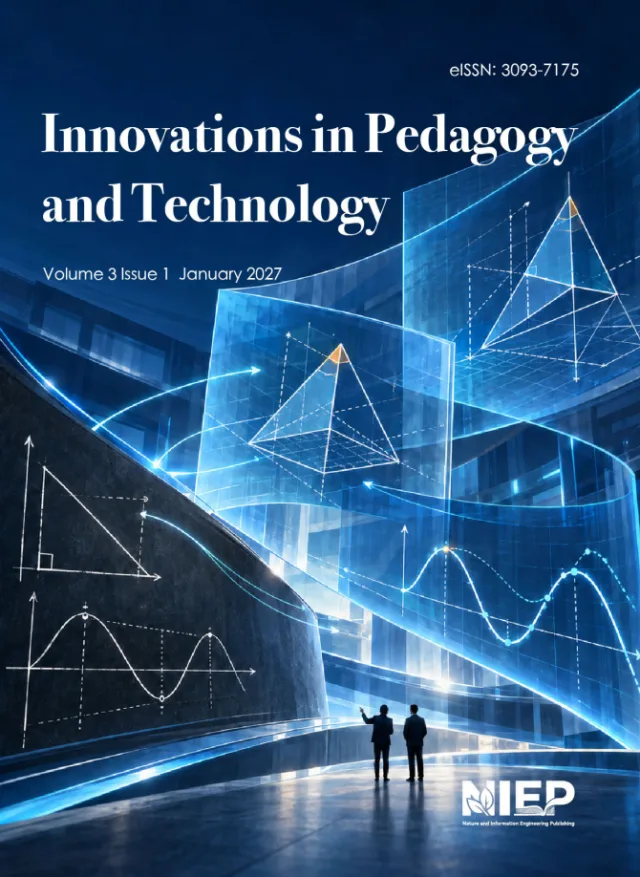
Innovations in Pedagogy and Technology
Selected Reading Guide
eISSN 3093-7175 (O) | Published by: NIEP (Nature and Information Engineering Publishing) | Editor-in-Chief: Prof. Arumugam Raman, Universiti Utara Malaysia
Quarterly from 2026 (published in Jan / Apr / Jul / Oct) | Website: https://journals.niepublish.com/ipt
Aims & Scope: Focused on innovation in pedagogy and educational technology, covering interdisciplinary frontiers such as pedagogy, educational technology, curriculum and instruction, digital learning, educational assessment, and AI applications in education.
Volume 03 | Issue 01 | January 2027
How Digital Literacy and National Values Are Reshaping Nigeria's Basic Education: A Guide to Africa's New Path of Educational Reform
When artificial intelligence and programming become compulsory subjects for primary school students, and history is once again brought back to the heart of the classroom, what kind of educational transformation is Nigeria undergoing? How can a country equip its children with cutting-edge technology without losing sight of national identity and civic responsibility? This is more than an adjustment to the timetable—it is a profound reflection on “what kind of people we aim to cultivate.”
01 Why Does Nigeria Need a “Digital + Values” Curriculum Reform?
Why is a developing country so eager to embed AI and programming into basic education while, at the same time, “bringing back” history? Behind this lies Nigeria's dual anxiety and expectation for the future. On the one hand, the National Information Technology Development Agency (NITDA) has set a goal of reaching a 95% digital literacy rate by 2030 and training 30 million citizens before 2027. Digital skills are no longer a “bonus” but the “passing line” for survival in the future.
Yet the breakneck advance of technology also brings concerns. UNESCO cautions that digital literacy is far more than knowing how to use a computer; it also carries a profound ethical dimension. Accordingly, the national curriculum framework Nigeria launched in 2025 not only makes digital technology, AI, and programming compulsory, but also reinstates history as a compulsory subject from primary through junior secondary school. It is like upgrading the engine and reinforcing the steering wheel of a high-speed train alike, ensuring that development stays on course.
02 What Does the New Curriculum Look Like: A Dual-Track Curriculum Architecture?
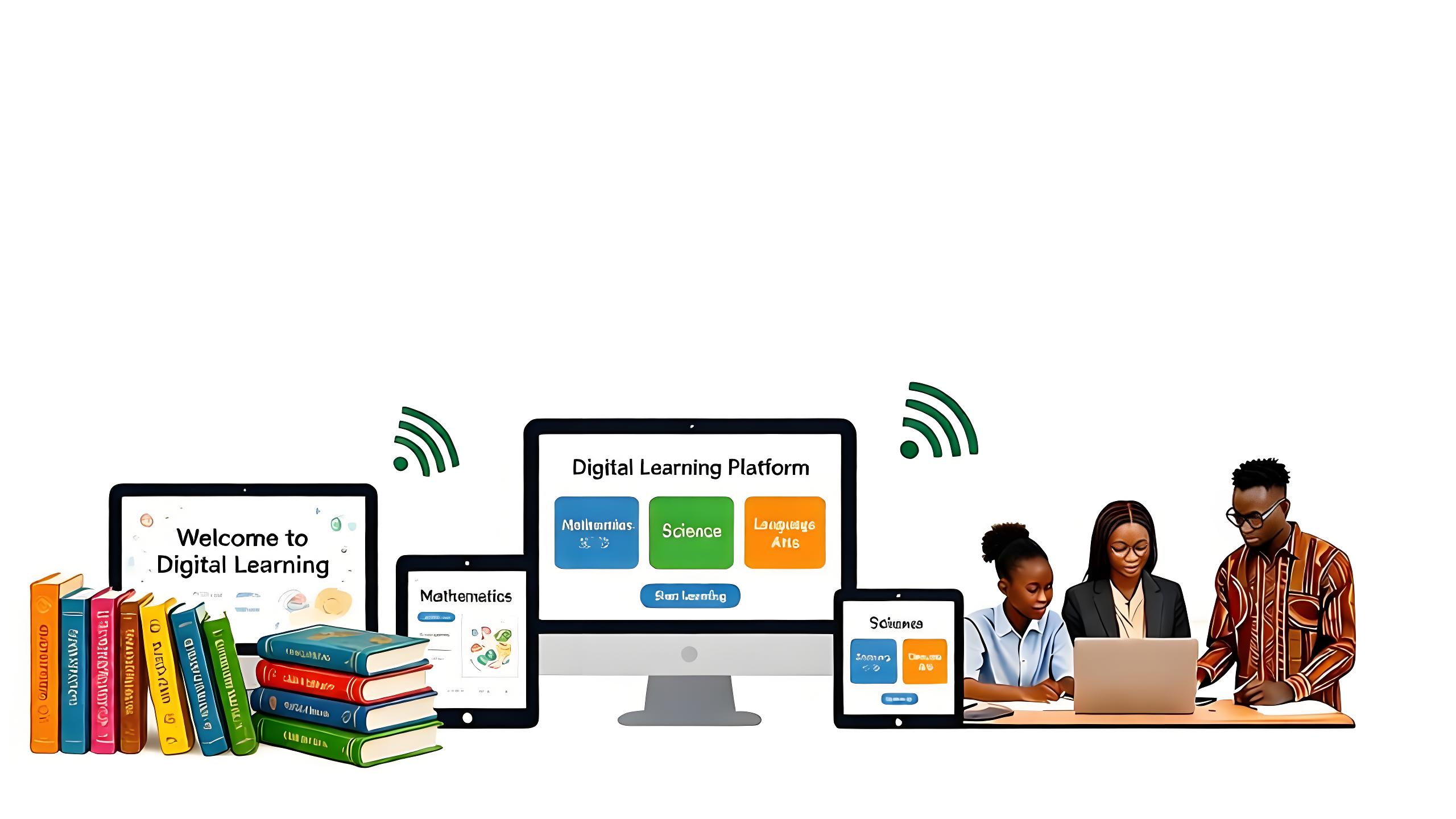
On the timetable, this takes the form of “dual-track parallel” learning. On the digital track, the new curriculum introduces programming, artificial intelligence, and other content; the Universal Basic Education Commission (UBEC) has launched platforms such as the “Nigerian Learning Passport” and the “Inspire Learning App.” The “Learning Passport” project, a collaboration between UNICEF and Transsion Holdings, has already reached more than 2.45 million children, allowing those in remote areas to touch the edge of the digital world.
On the values track, the senior secondary curriculum has added “Civic and Heritage Studies,” integrating history with civic education. Rather than rote memorization of dates and events, it strengthens national identity and civic consciousness by exploring the country's past. This architecture of “code in the left hand, history in the right” aims to cultivate new citizens who are both technologically literate and deeply devoted to their nation.
03 Digital Literacy and National Values: Why Must They Join Hands?
Why insist on binding them together? Because in this era they are two sides of the same coin. If a child masters algorithms yet does not know how to respect multiculturalism or protect privacy—or even uses technology to spread hatred—such “high digital literacy” becomes a danger instead.
The ethical dimension of digital literacy emphasized by UNESCO is precisely the core logic of this reform. Integrating national values into digital education is like fitting technology with “moral armor”: exploring algorithmic bias while learning to program, and weighing the authenticity of information and civic responsibility while using social media. Only when digital literacy and national values join hands can education truly cultivate builders who benefit society.
04 The Road to Implementation: Ambitious Ideals, Harsh Reality?
The blueprint is appealing, but the challenges on the ground are considerable. First is the question of “people.” The new curriculum introduces entirely new content such as programming and AI, yet teachers severely lack digital literacy training. Asking teachers accustomed to traditional teaching to teach artificial intelligence is like asking veteran drivers to pilot a spacecraft—especially when basic education already faces a shortage of teachers.
Next is the divide between “hardware” and “equity.” Weak infrastructure is a longstanding problem: without electricity or the internet, even the best app is a castle in the air. More troubling are the figures: in sub-Saharan Africa, the gender digital divide reaches 43%. Without intervention, this transformation may further widen the gap between girls and boys.
05 Looking Ahead: From Policy Text to Classroom Practice?
In the face of these challenges, the key to a breakthrough lies in “precision” and “coordination.” In teacher training, rather than a “blanket approach,” the sector should leverage platforms such as “Ignite for Teachers” to deliver tiered, phased digital literacy training, helping teachers first “dare to use” technology and then “use it well.” On infrastructure, beyond government investment, cross-sector partnerships such as that between UNICEF and Transsion Holdings can be deepened, drawing on the private sector to fill the hardware gap.
More importantly, constant attention must be paid to that 43% gender digital divide. When scaling up programs such as the “Learning Passport,” deliberate steps should be taken to favor girls and establish targeted incentives, ensuring that the dividends of digital education reach every child equitably. A thousand mountains and rivers lie between policy text and classroom practice, but as long as the direction is right, the long road need not be feared.
Conclusion: Why Feature This Study in This Issue?
Nigeria's educational reform is not only an attempt to cultivate 21st-century citizens for the country itself, but also a vivid example for developing countries at large. It tells us that the true modernization of education is never merely an accumulation of technology, but also a return of the humanistic spirit. When digital literacy and national values are deeply integrated in basic education, what we see is not only curricular change but also a nation's deepest aspiration for its future.
To treat this reading guide merely as a report on hot topics in African education would underestimate its weight. This journal focuses on innovation in pedagogy and educational technology, covering interdisciplinary frontiers such as pedagogy, educational technology, curriculum and instruction, digital learning, educational assessment, and AI applications in education. Nigeria's dual-track curriculum reform of “digital literacy + national values” sits precisely at the intersection of three directions: “innovation in curriculum and instruction,” “digital literacy education,” and “AI applications in education.” This issue features the guide precisely because it carries real policy texts, deployment platforms, and quantitative data that align closely with the journal's editorial standard of “advancing new theories, new methods, and practical cases in parallel.”
Publishing this guide carries multiple values. For the discipline, it takes African basic education as a case to illustrate the curriculum-design logic behind integrating digital literacy education with values education. For practice, it confronts real frontline problems—teacher training, infrastructure, and the gender digital divide—and offers actionable paths to a breakthrough. For readers, it explains professional issues in plain language so that researchers, policymakers, and frontline teachers can all understand and draw on it.
For the journal's development, featuring this article is a vivid footnote to its positioning, conveying to scholars worldwide an orientation of “not merely embracing technology, but asking how technology serves education and safeguards the humanities and equity,” and attracting high-quality submissions in curriculum and instruction innovation, digital literacy, and AI ethics in education. It demonstrates the journal's distinctiveness and innovation—at a time when narratives of technological dividends prevail, it does not shy away from contested issues such as the digital divide, algorithmic bias, and ethical boundaries, building a differentiated identity through a “technology + humanities” perspective. It also leverages open-access platforms and diverse global educational contexts to extend its international readership and authorship, broaden its editorial board and reviewer resources, and inject scholarly attention into the journal as it moves to a quarterly schedule.
The continued deep cultivation of the special topic on “technology-empowered innovation in curriculum and instruction” will help the journal accumulate serialized outputs and lay the groundwork for special issues, online seminars, and greater citation and visibility. The distinctive value of this article lies in using “the integration of digital literacy and values” as an entry point to interpret the journal's core proposition—the ultimate goal of innovation in educational technology is to serve teaching and learning, not to simplify education or distort the cultivation of people.
References
1. National Information Technology Development Agency (NITDA). (2025). National Digital Literacy Strategy and Vision 2030.
2. United Nations Children's Fund (UNICEF). (2025). Learning Passport Programme: Nigeria Progress Report.
3. United Nations Educational, Scientific and Cultural Organization (UNESCO). (2024). Global Framework on Digital Literacy: Ethics and Practice.
4. Universal Basic Education Commission (UBEC). (2025). Implementation Guide for the 2025 National Curriculum Framework.
About the Journal
This journal is an open-access, international English-language academic journal published by the Nature and Information Engineering Publishing (Malaysia), with International Standard Serial Number 3093-7175 (O). Its Editor-in-Chief is Prof. Arumugam Raman of Universiti Utara Malaysia, and its editorial board brings together outstanding scholars from around the world. It is a semi-annual publication in 2025 and becomes quarterly from 2026.
The journal primarily publishes research findings on innovation in pedagogy and educational technology, focusing on how new technologies empower educational innovation and covering interdisciplinary frontiers such as pedagogy, educational technology, curriculum and instruction, digital learning, educational assessment, and AI applications in education. It publishes new theories, new methods, and practical cases related to educational innovation.
Editorial Team: https://journals.niepublish.com/ipt/about/editorialTeam
Website: https://journals.niepublish.com/ipt
Email: contact@zycentre.com