
 Open Access

News & Announcements
Years of Policy Push for “Technology in the Classroom” — Do Students Actually Buy In? A Reading of India’s Educational Digitalization Through 450 Survey Responses
3 August 2026
Innovations in Pedagogy and Technology
Selected Reading Guide
eISSN 3093-7175 (O) | Published by: NIEP (Nature and Information Engineering Publishing) | Editor-in-Chief: Prof. Arumugam Raman, Universiti Utara Malaysia
Quarterly from 2026 (published in January, April, July and October) | Website: https://journals.niepublish.com/ipt
Scope: Dedicated to innovation in pedagogy and educational technology, covering interdisciplinary frontiers such as pedagogy, educational technology, curriculum and instruction, digital learning, educational assessment, and AI applications in education
Volume 02 | Issue 03 | July 2026
Years of Policy Push for “Technology in the Classroom” — Do Students Actually Buy In? A Reading of India’s Educational Digitalization Through 450 Survey Responses
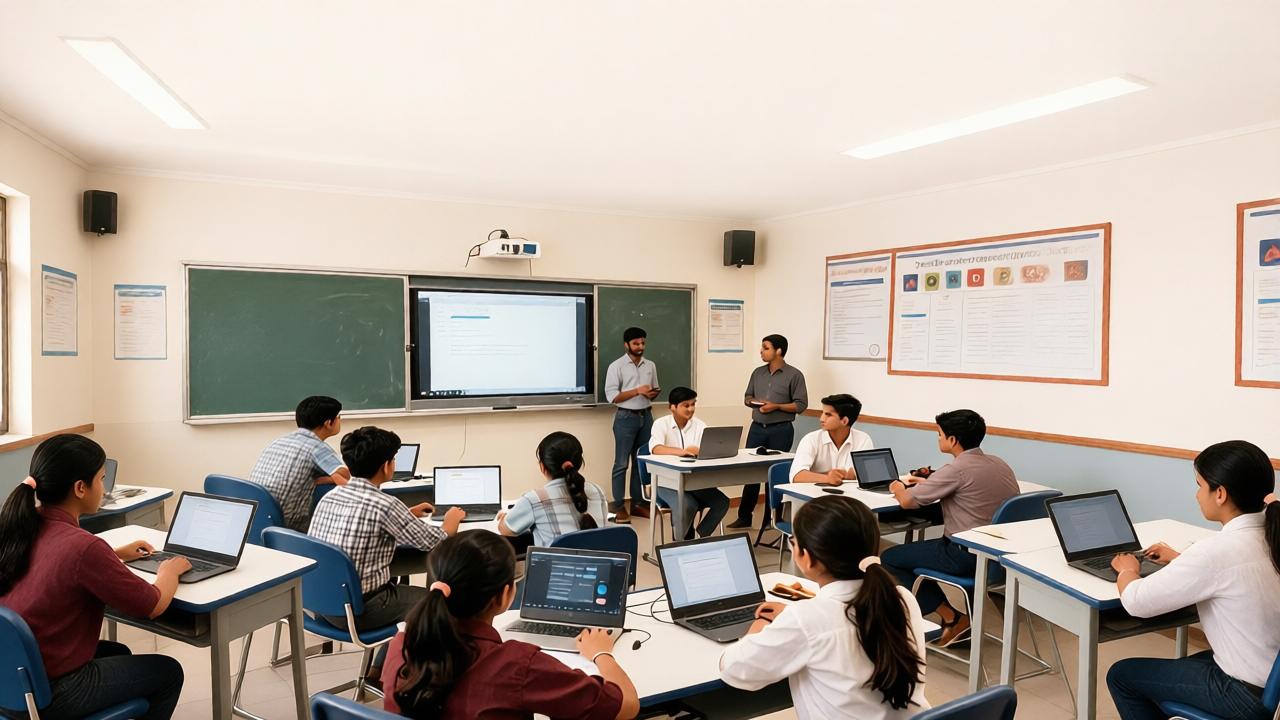
In recent years, “technology in the classroom” has become an almost universal slogan of educational reform worldwide: large screens have been installed, online classes have been launched, and learning platforms have followed one after another. But what do the students who actually sit in the classroom really think of these digital tools — did they genuinely help, or were they just another expensive “vanity project”?
India’s National Education Policy of 2020 (NEP-2020) wrote “technology integration” into its national strategy. Several years on, what has the result actually been? This issue’s featured paper, “Technology Integration in National Education Policy of India and Its Impact on Enhanced Engagement and Student Learning Outcomes”, uses 450 student questionnaires and an “Activity Theory” framework to provide a rare “review of outcomes” for this global wave of educational digitalization.
01 Why Did National Policy Insist on Writing “Technology Integration” into Its Strategy?
You might wonder: is it really just about a few more pieces of software or a few more screens — does it warrant being elevated to the level of national policy? The paper pushes this question one level deeper right from the start. The authors argue that the primary goal of education is to disseminate truth through scientific methods of inquiry, helping a person develop cognitive, social, ethical and emotional capacities at once, rather than merely stuffing in knowledge points. Precisely because the goal is so weighty, NEP-2020 places technology integration at the core of the teaching-and-learning process.
Behind this lies the impetus of the times. During the COVID-19 pandemic, the global wave of school closures forced online education from an “optional choice” into a “mandatory question”. UNICEF reported that schools serving more than 168 million children worldwide were completely closed for almost an entire year. As the pandemic receded, a natural question surfaced: what has the hastily rolled-out digitalization actually left behind, and where should it go from here? The answer offered by NEP-2020 is not simply to install a few more screens, but to make technology truly serve the cultivation of the “whole person”.
02 How Does This Paper “Take the Pulse” of Educational Digitalization?
Whether a slogan holds up depends on how it is measured. This study does not simply count “how many devices were bought or how many platforms were installed”; instead, it borrows the “Activity Theory” framework as its yardstick. Rather than viewing technology as isolated objects, it treats “teachers, students, digital tools and classroom rules” as an interlocking system to be observed: what role tools play in learning activities, and where they get stuck.
Around this framework, the three authors, together with faculty and students from institutions such as Uttarakhand Technical University and Rohilkhand University, collected 450 responses from students of different disciplinary backgrounds through seminars, questionnaires and cognitive workshops. The sample may not be earth-shattering, but it wins on the diversity of its sources and the breadth of its perspectives, revealing how students with different foundations “get along” with digital tools.
03 450 Responses: The Value of Technology Lies in Integration, Not Simple Accumulation
The core message of the entire study: what truly works is the “thoughtful integration” of educational technology tools into traditional teaching, not their simple accumulation. Fitting an engine onto a horse-drawn carriage does not amount to building a car. No matter how new the equipment, if teachers still lecture verbatim from the textbook and students still sit passively nodding, then digital tools are at best a “glowing blackboard”. The study’s keywords also reveal its line of thinking: student-centredness, digital pedagogy, and socially responsible learning ecosystems, with “values education” deliberately brought in.
The paper is by no means one-sided praise. The authors candidly acknowledge the various challenges accompanying digitalization, pointing out the barriers to the digital transformation of higher education in India from the perspective of university managers: mindsets that have failed to keep up, training that has not kept pace, and a disconnect between equipment and curriculum. The message is clear: technology is a lever, not an answer; used skillfully, it amplifies good teaching, and used clumsily, it merely amplifies chaos.
04 Back in an Ordinary Classroom — What Can Teachers Take Away?
Pulling the focus from national policy back to an ordinary classroom, what can frontline teachers take from this study? At least three down-to-earth reminders. First, do not chase trends; think clearly first about which learning objective a tool actually serves — if the objective is not clear, the more tools there are, the more chaotic things become. Second, digital resources should revolve around students, not students revolve around software — students from all disciplinary backgrounds can benefit, provided that instructional design keeps pace. Third, do not squeeze values education out of the digital classroom: being able to use technology and also understanding whom technology should serve is what counts as complete cultivation.
In recent years India has also built national-level digital education platforms such as DIKSHA. Yet the paper ends on a plain sentence: rather than asking “is the technology advanced”, it is better to ask “has it helped every child learn better”.
Conclusion: Why Publish This Reading Guide in This Issue?
Educational digitalization is a frontier topic long and hotly debated in the global education community. This empirical study from India provides a first-hand survey sample from a South Asian developing country for the global transformation of educational technology. In light of the scope of our journal, Innovations in Pedagogy and Technology, selecting and publishing this reading guide follows a clear editorial logic and carries real scholarly value, while also providing strong support for the journal’s long-term development.
Our journal has always focused on innovation in pedagogy, the integration of educational technology, digital learning, curriculum and instructional reform, and the interdisciplinary frontier of AI applications in education, giving priority to new theories, new methods, cross-national empirical cases and front-line implementation. This reading guide fits our submission scope exceptionally well: it conducts empirical research closely tied to the implementation of India’s national-level education policy, constituting a typical case of policy translation into practice; it builds its framework on Activity Theory, deriving quantitative conclusions from 450 first-hand questionnaires; and it steps outside the Western research context to complement practical cases from emerging Asian economies, aligning with our journal’s international plan to build a globally diverse library of education cases.
In terms of publication value, at the disciplinary level the article clarifies the essential distinction between “technology accumulation” and “instructional integration”, enriching the outcomes of the digital-learning and classroom-innovation sections; at the practical level it directly confronts bottlenecks such as lagging teacher training and the disconnect between software/hardware and curriculum, distilling three classroom strategies that can be implemented directly; at the education-of-the-person level it embeds values education into the digital classroom, echoing the digital-education ethics issues that concern our journal and balancing the instrumental rationality of technology with the original aspiration of whole-person education.
In terms of its contribution to the journal’s development, first, on distinctiveness: most educational-technology journals concentrate on Western samples, whereas this article brings an empirical case from a South Asian developing country, forming a differentiated, country-specific content section and broadening contributions from Asia, Africa and Southeast Asia. Second, on innovation: the article constructs a complete research chain of “national policy — theoretical framework — questionnaire survey — classroom practice”, establishing a model of “theory + empirics + implementation”. Finally, on uniqueness: the article insists that technology serve whole-person education, incorporating digital ethics and civic literacy into teaching evaluation, which matches our journal’s interdisciplinary positioning of “pedagogical innovation + technology application + humanities education”, forging a content identity that other journals can hardly replicate and raising our journal’s distinctiveness among open-access international education journals.
In summary, this selected reading guide is both a high-quality content pillar for the current issue and an important lever for our journal in shaping its international character, optimizing its manuscript structure, and expanding global academic cooperation. It enriches the journal’s sections with cross-national empirical cases, guides the direction of submissions with a rigorous research paradigm, and consolidates the journal’s brand uniqueness through a theme that values both technology and the humanities — steadily supporting our journal’s growth into an influential international open-access academic journal in the field of pedagogical and educational-technology innovation in the Asia-Pacific region.
References
1. Gangwar, D. S., Tyagi, S., & Gangwar, S. (2026). Technology Integration in National Education Policy of India and Its Impact on Enhanced Engagement and Student Learning Outcomes. Innovations in Pedagogy and Technology, 2(3), 146–159. https://doi.org/10.63385/ipt.v2i3.101070
2. Ministry of Human Resource Development, Government of India. (2020). National Education Policy 2020.
3. United Nations Children's Fund (UNICEF). (2021). Schools for More Than 168 Million Children Globally Have Been Completely Closed for Almost a Full Year.
4. UNESCO. (2020). Education: From COVID-19 School Closures to Recovery.
5. U.S. Department of Education, Office of Educational Technology. (2023). Artificial Intelligence and the Future of Teaching and Learning: Insights and Recommendations.
About the Journal
Our journal is an open-access, international, English-language academic journal published by the Nature and Information Engineering Publishing of Malaysia, with the International Standard Serial Number 3093-7175 (O). Its Editor-in-Chief is Prof. Arumugam Raman of Universiti Utara Malaysia, and its editorial board brings together outstanding scholars and experts from around the world. It was published semi-annually in 2025 and has become a quarterly from 2026.
Our journal mainly publishes research outcomes in the fields of pedagogical innovation and educational technology, focusing on new technologies empowering educational innovation and covering interdisciplinary frontiers such as pedagogy, educational technology, curriculum and instruction, digital learning, educational assessment, and AI applications in education. It welcomes new theories, new methods and new practices related to educational innovation.
Editorial Board page: https://journals.niepublish.com/ipt/about/editorialTeam
Journal website: https://journals.niepublish.com/ipt
Journal email: contact@zycentre.com