 Open Access
News & Announcements
Let Ecotourism Return to Community-Based Foundations: The Academic Trajectory and Editorial Philosophy of Hungarian Scholar Lóránt Dénes Dávid
10 April 2025
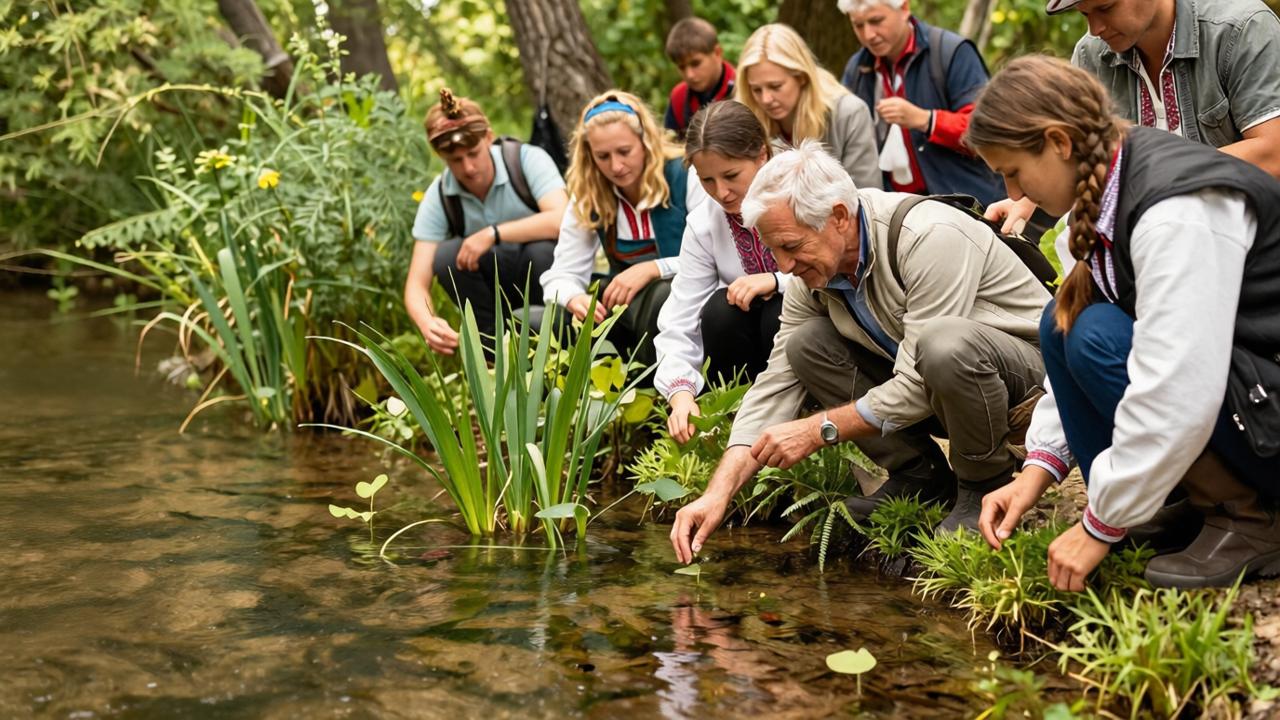
On the map of European sustainable tourism research, Lóránt Dénes Dávid is a name that defies categorization within any single discipline. The spatial perspective of geography, the industrial logic of economics, and the carrying capacity awareness of environmental science have long intertwined in his scholarship. As a professor and department head of the Tourism and Hotel Management program at the Faculty of Economics and Business, John von Neumann University, Hungary, while also serving as a researcher at the University of Public Service (formerly the University of Agricultural and Life Sciences) in Hungary, a member of the European Academy of Arts and Sciences, and Editor-in-Chief of the English-language international journal Eco-Tourism and Sustainable Development, his academic identity itself constitutes an interdisciplinary coordinate.
Worth noting is his scholarly foundation: he holds a Ph.D. in Geography and has obtained habilitation qualifications in three distinct disciplines—Business Administration, Environmental Science, and Regional Science. In the European academic system, scholars who complete habilitation reviews in three disciplines are rare, and this has directly shaped his subsequent research consciousness regarding the synergistic alignment of “ecological-economic-sociocultural” triple values.
Research Trajectory: From Community Income Generation to Tourism Net Zero
In recent years, Professor Dávid’s research has consistently focused on ecotourism, community-based tourism, slow tourism, cultural-heritage tourism development, tourism carbon neutrality, blue economy, and rural sustainable development, with findings published in international journals such as Sustainability and Frontiers in Environmental Science. His representative works cover topics including community-based ecotourism, tourism net-zero transition, riverine and lacustrine basin tourism ecological efficiency, cultural heritage tourism governance, and slow tourism experiences.
Methodologically, he favors an empirically grounded approach: employing field research, cross-case comparisons, and econometric modeling to analyze the balancing mechanisms among ecological conservation, local community well-being, and industrial economic benefits in tourism development, providing theoretical and empirical references for tourism planning and policy-making across Central and Eastern Europe, Central Asia, and Southeast Asia. Cross-border river basins, nature reserves, and traditional villages are field sites he repeatedly returns to, his research pointing toward a lightweight development model that balances biodiversity conservation with local income generation, does not disrupt pristine ecosystems, and respects indigenous cultures.
Academic Network: Connecting Central and Eastern Europe with the Asia-Pacific
Professor Dávid has long been active in the global sustainable tourism academic network, frequently attending international conferences on tourism, geography, and sustainable development hosted across Europe and Asia, delivering keynote addresses and thematic presentations. He has undertaken academic visits, field investigations, and joint research projects across Central Asia, Southeast Asia, and various regions of China, participating in collaborative projects on synergistic development of cross-border river basin cultural-tourism resources and heritage tourism conservation, promoting long-term and stable cooperative relationships between Central and Eastern European scholars and Asia-Pacific research teams. These exchanges are not ceremonial visits but substantive collaborations anchored by joint research projects and co-publications.
Core Perspectives: Three Non-negotiable Bottom Lines
On various international platforms, Professor Dávid’s viewpoints have consistently been clear and firm. First, ecotourism is not simply “nature sightseeing”—it must be built on the foundation of community empowerment, otherwise it is merely resource consumption repackaged. Second, the essence of sustainable tourism lies in treating ecological carrying capacity as the red line for development and placing the long-term benefits of local residents at the core of industrial logic—conservation and income generation are not a trade-off but a matter of priority. Third, in facing carbon neutrality goals, the tourism industry requires coordinated efforts between technological tools and social governance; no single technological transformation can accomplish systematic transition. At the same time, he maintains a cautious stance toward smart tourism: digitalization in ecologically sensitive destinations should serve goals of moderate, inclusive, and low-intervention management, rather than becoming an accelerator for over-commercialization and ecological overload.
Editorial Philosophy: Reserving Space for “Silent Practices”
Upon assuming the role of Editor-in-Chief of Eco-Tourism and Sustainable Development, Professor Dávid extended the above judgments into the realm of academic publishing. He observed that current international sustainable tourism journals tend to favor cases from developed regions, with insufficient attention to indigenous practices in emerging ecotourism regions such as Central and Eastern Europe, Central Asia, and Southeast Asia; some journals prioritize grand theoretical models, leaving little room for frontline community practices and nationally distinctive cases; and many journals remain confined to a single dimension of either pure environmental science or tourism economics, with limited receptivity to interdisciplinary research on triple-value synergy.
Accordingly, the journal has established a clear complementary positioning: adhering to an open-publishing orientation that is interdisciplinary and transregional, balancing theoretical innovation with practical cases, equally welcoming quantitative empirical studies, qualitative research, field cases, and policy commentaries; encouraging research from developing regions and transitioning economies, valuing indigenous community perspectives; maintaining equal emphasis on “theory—policy—cases,” supporting multi-dimensional comprehensive assessment of tourism sustainability from ecological, economic, and sociocultural angles. The submission scope covers ecotourism planning, community tourism, cultural-heritage conservation, blue economy, rural development, tourism carbon neutrality, smart sustainable tourism, and tourism policy comparison, aiming to build an inclusive and pluralistic dialogue platform rooted in local practices for scholars from Central Europe, the Asia-Pacific, and Central Asia.
Beyond research and journal editing, he also undertakes doctoral supervision, offering doctoral courses such as Sustainable Tourism and Rural Development, guiding young scholars from multiple countries, and continuously cultivating cross-regional research capacity.
From fieldwork to journals, from classrooms to international conferences, Professor Dávid’s work has always revolved around the same proposition: tourism can serve as an engine for local development, but only on the condition that it does not overdraw ecological resources or bypass communities. This stance is both his academic methodology and the value coordinate he has set for this emerging journal.