
 Open Access

News & Announcements
When Scenery Breaks Under the Crowd: Understanding Carrying-Capacity Governance for Overtourism
4 May 2026

— A Selected Reader's Guide from Eco-Tourism and Sustainable Development
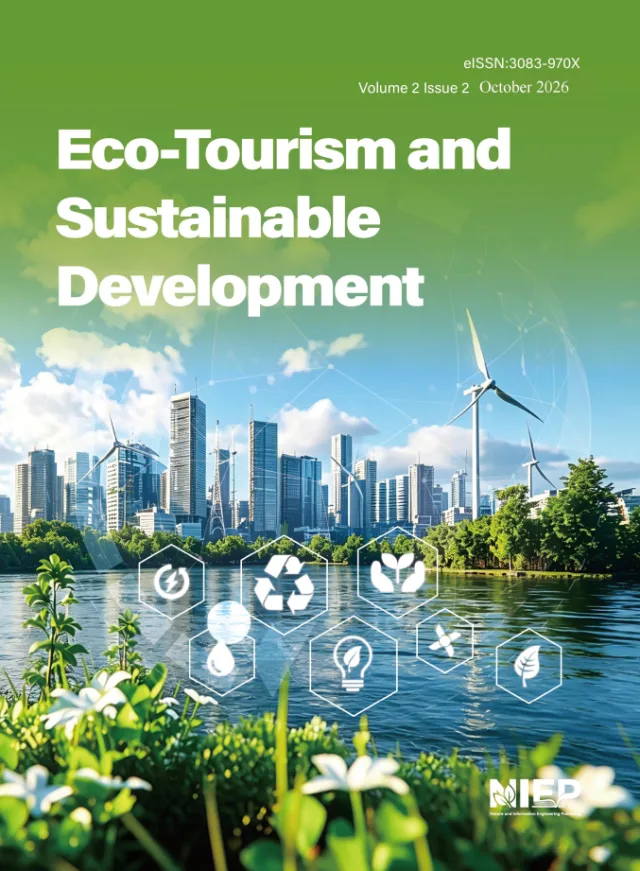
In April 2026, Eco-Tourism and Sustainable Development, Volume 2, Issue 1, was officially published. As an open-access international academic journal devoted to ecotourism, sustainable destination management, community participation, biodiversity conservation, and the balance between tourism development and ecological protection, this journal has always kept close attention to the most cutting-edge issues at the intersection of tourism development and ecological conservation. The series of readers' guides launched in this issue—"After Popular Ecotourism Destinations Are Overrun: How Exactly Should the Carrying-Capacity Line Be Drawn?"—confronts the global challenge of "overtourism" head-on and systematically presents the scientific logic of carrying-capacity governance. Drawing on this journal's positioning, the present article explains the value, significance, and contribution to the journal of the piece selected for publication in this issue.
Overview of Content: A Complete Logical Chain from "Overcrowding" to "Governance"
The article unfolds a five-part analysis around the question of "how to govern overtourism." First, why popular destinations become "overrun"—at mountain-type World Heritage sites, peak-season single-day visitor numbers exceed twice the designed capacity, and during peak hours three or four people are packed into every square metre of the core trails; the Galápagos Islands set daily landing caps, designate viewing routes, and require visitors to travel with a mandatory accompanying guide; Venice levies an entry fee; and Barcelona has seen "anti-tourist" sentiment emerge. Second, how to scientifically "draw" the carrying-capacity line—the study splits carrying capacity into two yardsticks, "environmental carrying capacity" and "social carrying capacity," the former concerning the limits of tolerance of soil, water bodies, and wildlife, the latter concerning residents' lives and tourists' experience; Bhutan promotes "high-value, low-volume" tourism, controlling flows through the dual valves of price and quota, and stresses that carrying capacity must fluctuate dynamically with season, weather, and vegetation-recovery periods. Third, whether green certification can drive an upgrade—the article reviews dozens of eco-labels worldwide, noting that "hard-core" certifications are quantified hard indicators of energy consumption, wastewater treatment, community benefit, and carbon emissions, with the GSTC criteria regarded as the "passing line," Costa Rica's five-level CST certification capable of influencing major-platform recommendations and government procurement, while also warning of "greenwashing" risk. Fourth, whether reservation and flow-limiting measures will win tourists' "buy-in"—Machu Picchu uses time-slotted entry, and the Inca Trail's roughly five hundred daily hiking permits must be bought up half a year in advance; survey research shows that as long as rules are transparent and the experience is better, visitors do not resent flow limits, provided these are paired with "soft guidance" such as pre-trip education and route diversion. Fifth, can a single scenic-area management committee cope—destination management organizations (DMOs) must convene government, scenic areas, communities, travel agencies, and environmental organizations to "sit at one table"; in one island case, unified booking together with reinvestment into coral restoration and fishing-village communities left visitor satisfaction rising rather than falling.
Reasons for Selection: A High Degree of Fit with This Journal's Field
The primary reason this journal selected the article is its high degree of fit with the journal's field. The journal is positioned around ecotourism, sustainable destination management, and community participation, and overtourism is precisely the core contradiction at the intersection of these three: visitor growth tests the ecological environment's limits of tolerance, squeezes the living space of resident communities, and undermines the foundations of a destination's sustainable development. The carrying-capacity assessment, green certification, reservation-based flow limiting, and collaborative governance discussed in the article are exactly the frontier topics the journal focuses on—"culture-and-tourism carrying-capacity assessment" and "community tourism governance"—so the thematic direction resonates in step with the journal's field. Second, the article directly addresses a real pain point of the global tourism industry, combining academic value with practical concern. Over the past decade or more, from Machu Picchu to Venice, and from the Kathmandu Valley to the old town of Barcelona, overtourism has become a common affliction of popular destinations; the related discussion urgently needs both scholarly support and governance solutions, providing the journal with an ideal entry point for responding to reality and advancing knowledge transfer. Third, drawing on papers the journal has published, the article organizes scattered empirical research into a complete governance logic chain—"why overload—how to draw the line—how to certify—how to limit flow—who coordinates"—demonstrating the journal's organizational capacity in interdisciplinary integration and making it easier for non-specialist readers to enter the field, thereby expanding the journal's content influence.
Publication Value and Significance: An Examination from Four Perspectives
The value and significance of publishing this article can be examined from four levels—discipline, practice, readers, and international discourse. From the disciplinary level, the article develops the traditional concept of carrying capacity into an "environmental—social" two-yardstick model and injects the ideas of dynamic fluctuation and an "ecological dashboard," pushing carrying-capacity research from static thresholds toward a systematic governance framework, echoing and extending the journal's academic directions in "ecotourism planning" and "culture-and-tourism carrying-capacity assessment," and providing a conceptually dialogueable tool for subsequent research. From the practical level, the cases the article compiles—Bhutan's "high-value, low-volume" approach, Costa Rica's CST certification, Machu Picchu's reservation-based flow limiting, and DMO collaborative governance—offer destination managers worldwide a reference for governance they can draw on, strengthening the journal's bridging value of "connecting academia and industry." From the readership level, the article narrates professional issues in an accessible style, serving scholars, policymakers, and tourism practitioners alike; it meets specialist readers' demand for frontier governance frameworks while lowering the barrier to public understanding, helping the journal broaden its readership and social impact. From the level of international discourse, this journal is an open-access international English-language academic journal, and the article's cross-regional, cross-institutional synthesis of global cases naturally fits the journal's internationalized positioning, helping to raise the journal's visibility and voice in the field of international ecotourism research and contributing to building an academic platform of global influence.
Distinctive, Innovative, Unique: The Article's Contribution to the Journal's Development
Analysed from the perspective of these "three qualities," this article offers significant impetus and a signature contribution to the development of this journal.
On distinctiveness, the article takes up "carrying-capacity governance"—a topic all too easily diluted into generalities—rather than settling for a general introduction to ecotourism, and focuses on the governance puzzle of "however beautiful the scenery, it cannot withstand the crowds," advancing step by step from the causes of overload, scientific line-drawing, and certification-driven upgrading, to reservation-based flow limiting and collaborative governance, forming a distinctive thematic identity. Unlike most ecotourism reviews, it turns its lens on the widespread predicament of popular destinations worldwide, giving the journal's content a distinctive temperament of confronting reality and responding to pain points among comparable publications, and helping to shape this journal's content identity of being "rooted in ecology, concerned with governance, and oriented to the world."
On innovativeness, the article breaks through in both knowledge framework and narrative style. It creatively proposes the carrying-capacity "two-yardstick" model and the dynamic "ecological dashboard" imagery, holding environmental and social carrying capacity in parallel; and it innovatively integrates certification mechanisms, flow-limiting tools, and DMO collaborative governance into a single governance loop, displaying a systematic, interdisciplinary and cross-sectoral approach to governance. This integrative framework of "one puzzle, multidimensional solutions" is highly consistent with this journal's advocacy of the "interdisciplinary frontier," highlighting the journal's forward-looking stance in knowledge innovation and offering a model for attracting high-quality submissions and forming a research highland.
On uniqueness, the article adopts a global perspective through cases from Machu Picchu, the Galápagos, Bhutan, Venice, Barcelona, Costa Rica, and many other places, holding governance experience from different cultural and institutional backgrounds within a single analytical framework—a rarity among comparable journals that study single countries or regions. It is not merely an aggregation of knowledge but constructs a comparative platform on which researchers worldwide can converse, fitting this journal's positioning as an international academic platform that is open-access, with a globally composed editorial board and stable semi-annual publication. This uniqueness translates directly into the journal's content moat and brand identity—when readers speak of "a global comparison of ecotourism governance," they will naturally think of this journal, reinforcing its leading position in the field and helping it occupy a unique ecological niche in global ecotourism research.
Conclusion: Let "Love" Have Its Measure, and Let Governance Take Root
"Carrying capacity has never been an arithmetic problem but a problem of relationships." The landing point of this article runs in the same direction as this journal's publishing philosophy: the sustainable development of ecotourism is not simply about raising the threshold, nor about letting visitor flows overdraft nature, but about striking a balance among ecological protection, community well-being, and tourist experience. This journal's selection of the article is both a proactive response, based on its field, to a real-world puzzle, and a long-term strategy to cohere a community through high-quality content and expand international influence. In the future, Eco-Tourism and Sustainable Development will continue to stand on the frontier of ecotourism and sustainable destination management, publishing more research that combines scholarly depth with real-world concern, so that the idea—"the best travel is not hurrying through the whole world, but ensuring that this world can still be seen by the next generation"—may continually take root in the dialogue between scholarship and practice.
Eco-Tourism and Sustainable Development
Eco-Tourism and Sustainable Development is an open-access international English-language academic journal published by the Zhongyu International Education Centre (M) in Malaysia, with the International Standard Serial Number (ISSN): 3083-970X (O). The journal's editor-in-chief is Professor Lóránt Dénes Dávid of Hungary, and its editorial board brings together outstanding scholars and experts from relevant fields around the world. The journal is a semi-annual publication in 2025 and 2026, appearing regularly in April and October. It mainly publishes the latest research findings in the fields of ecotourism and sustainable tourism, focusing on the synergistic path between tourism development and ecological protection and covering interdisciplinary frontiers such as ecotourism planning, culture-and-tourism carrying-capacity assessment, community tourism governance, the green culture-and-tourism industry, climate change and tourism responses, and the conservation of tourism resources, and includes new theories, new methods, and practical cases relevant to ecotourism research.
Editorial Team page: https://journals.niepublish.com/etsd/about/editorialTeam
Journal website: https://journals.niepublish.com/etsd
Journal email: contact@zycentre.com