

About the Journal
Contemporary Visual Culture and Art is an international, peer-reviewed, open-access journal dedicated to the exploration of contemporary visual culture and artistic practices. The journal provides an interdisciplinary platform for scholars, artists, and practitioners to engage in innovative research and theoretical discussions on the evolving landscape of visual arts in the 21st century. View full aims and scope
- Frequency — Semi-annual (June and December)
- Open Access — freely available to readers worldwide.
News & Announcements
View all →Research Articles
View all → Open AccessPublished: 28 July 2025
Generative Visions: AI, Human Imagination, and the Future of Art
Contemporary Visual Culture and Art · 37–53 · 10.63385/cvca.v1i1.23
This study critically examines the evolving relationship between Artificial Intelligence (AI) and contemporary art, exploring how computational systems are reshaping concepts of creativity, authorship, and aesthetic production. Tracing key historical developments—from Harold Cohen’s pioneering AARON program in the 1970s to conte
Open AccessPublished: 22 July 2025Design Principles for AI-Assisted Filmmaking: Lessons from ‘Our T2 Remake’ and Beyond
Contemporary Visual Culture and Art · 1–22 · 10.63385/cvca.v1i1.60
The integration of Artificial Intelligence (AI) in video production represents a fundamental transformation in creative workflows, production methodologies, and content distribution. Through a comprehensive review centered on Our T2 Remake (OT2R) — a groundbreaking 2024 collaborative reinterpretation of Terminator 2: Judgment Da
Open AccessPublished: 16 June 2025Visual Art and Artificial Intelligence: Tensions between Ethics, Aesthetics, and Authorship in the Algorithmic Age
Contemporary Visual Culture and Art · 68–78 · 10.63385/cvca.v1i1.189
This article examines the impact of artificial intelligence (AI) on the visual production of contemporary art, generating debates about authorship, creativity, and aesthetic legitimacy, while addressing the ethical and labor implications of automated creation. The main objective of this research is to explore the perception, pro
Open AccessPublished: 7 May 2026Community Responses to Kannywood Hausa Films in Northern Nigeria: A Cultural and Societal Perspective
Contemporary Visual Culture and Art · 26–35 · 10.63385/cvca.v2i1.152
"Kannywood", a term referring to the Hausa-language film industry rooted in Kano, Nigeria, plays a significant role in shaping cultural, social, and economic narratives among the Hausa community. This study explores the diverse reactions of the Hausa audience toward Kannywood films, based on content gathered from social media pl
Open AccessPublished: 15 May 2025Generative AI as a Philosophical Mirror: Machine Hallucination and the Aesthetics of Algorithmic Representation
Contemporary Visual Culture and Art · 54–67 · 10.63385/cvca.v1i1.98
This case study delves into the unresolved philosophical complexities of representation in contemporary visual arts, using Refik Anadol’s Machine Hallucination series (2019–present) as a pivotal lens. By harnessing artificial intelligence (AI) to create immersive, data driven installations, Anadol’s work disrupts traditional not
Open AccessPublished: 26 May 2026YouTube Episteme under Algorithmic Governance: A Mixed-Methods Study of Clickbait Comedy
Contemporary Visual Culture and Art · 36–54 · 10.63385/cvca.v2i1.470
Michel Foucault’s concept of power/knowledge explains how institutions historically controlled knowledge. In the digital age, new epistemic structures have emerged, where YouTubers, representing diverse voices, appear to democratize knowledge and influence public beliefs. However, this study argues that YouTube clickbait comedia
Open AccessPublished: 10 October 2025Visualizing Childhood: Multimodal Artistic Strategies in Suzy Lee’s Shadow and Shaun Tan’s The Arrival
Contemporary Visual Culture and Art · 1–14 · 10.63385/cvca.v1i2.220
This article examines contemporary picturebooks as part of visual culture and as agents in the cultural construction of childhood. Drawing on multimodality, intermediality and visual culture studies, it proposes a visually oriented framework for analysing how images, page design and narrative structures shape meaning in children
Open AccessPublished: 24 July 2025An Exploration of the Impact of Generative AI Video on Historical Learning Motivation in Digital Textbooks
Contemporary Visual Culture and Art · 23–36 · 10.63385/cvca.v1i1.88
This research focused on examination of the advantages and possibilities of AI digital textbooks using Generative AI at the present time when printed textbooks are completely replaced by the digital textbooks. Previous studies have proposed that historical content games have a positive effect on intellectual curiosity and acquir
Open AccessPublished: 20 February 2026Ambiguous Visualities: Gender, Governmentality and Graffiti in Urban India
Contemporary Visual Culture and Art · 1–14 · 10.63385/cvca.v2i1.187
This paper examines a series of murals produced by a street art collective in an Indian city, situating them within the rapid expansion of state- and privately commissioned street art projects across Indian urban centres over the last decade. While street art has historically been associated with claims to urban democracy and ch
Open AccessPublished: 7 December 2025Questioning Madness in It’s Okay to Not Be Okay (2020) and Feng Ai (2013)
Contemporary Visual Culture and Art · 66–77 · 10.63385/cvca.v1i2.273
An increasing number of contemporary East Asian films and television series show alternative portrayals of characters with mental disabilities that differ from mad men, fools, or other stereotypes of people with disabilities. These stereotypes of disabilities are related to ableism, an able-bodied center point of view. While cri
Explore research in this journal
Explore keywords from this journal’s published articles.
Latest Issues
All issues →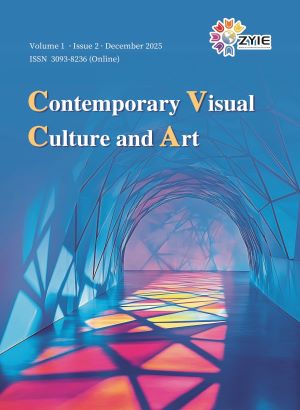
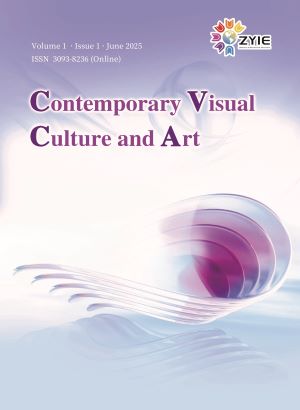
OPEN FOR SUBMISSIONS
Your next paper belongs in the conversation.
Review the journal scope and manuscript requirements before submitting your research.
Prepare Your Manuscript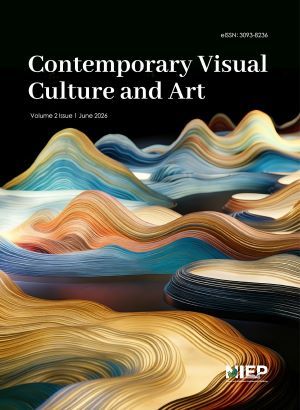
Discover more NIEP journals
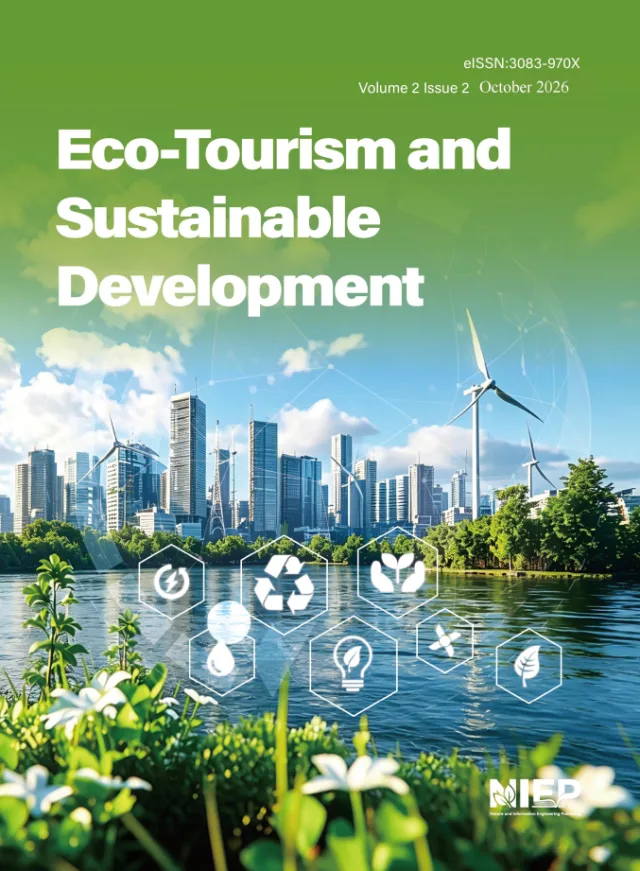 Environment & EcologyEco-Tourism and Sustainable Development
 EducationCross-Cultural Education Studies