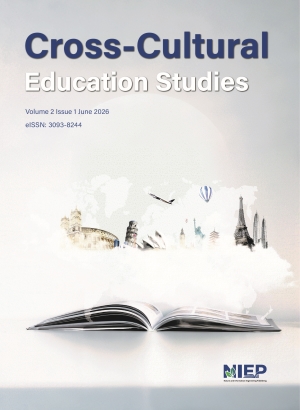


About the Journal

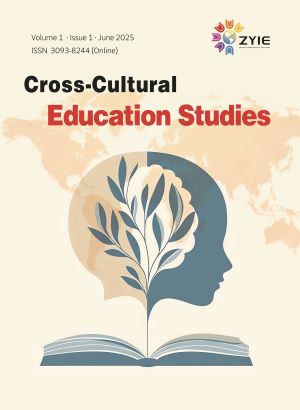
Cross-Cultural Education Studies promotes a deeper understanding of educational practices, policies, and theories across diverse cultural contexts. The journal aims to serve as a platform for researchers, educators, and policymakers to exchange ideas, share findings, and engage in critical discussions about the impact of culture on education. We are committed to advancing cross-cultural perspectives that enhance educational equity, quality, and inclusivity on a global scale. View full aims and scope

  • Frequency — Biannual (June and December)
  • Open Access — freely available to readers worldwide.

Research Articles

View all →

Encoding Culture, Embodying Identity: A Study of Somatic Proverbs

Aida R. Nurutdinova

Cross-Cultural Education Studies · 1–18 · 10.63385/cces.v2i1.160

This article presents a cross-cultural investigation into somatic paroemias (proverbs and idioms structured by bodily imagery) positioning them as fundamental linguistic expressions that encapsulate a culture’s embodied memory and actively shape conceptions of national identity. By integrating an analytical methodology that coup
Read article →↓ PDF Cite773 views744 downloads

Social-Emotional Learning in Rural Zambia: A Qualitative Study of Educator Perspectives in the Zambezi District

Catherine Zeisner

Cross-Cultural Education Studies · 34–54 · 10.63385/cces.v2i1.523

Social-emotional learning (SEL) and psychosocial support (PSS) are increasingly recognized as foundational to holistic student development, yet research from rural sub-Saharan African contexts remains critically underrepresented in the global literature. This qualitative case study investigated how PK–12 educators in Zambezi, Za

Read article →↓ PDF Cite634 views621 downloads

Study on the Influence of a Digital-Intelligent Language Partner Model on Chinese Culture Acquisition among International Students

Boyan Cai

Cross-Cultural Education Studies · 110–132 · 10.63385/cces.v1i2.382

The global wave of digitalization and smart technology is changing how culture is shared. This study looks at how using a digital language companion, “AI Chinese”, affects the learning of Chinese culture by international students in Guangzhou. It is hard to measure short-term results in culture teaching. The study observed 30 st

Read article →↓ PDF Cite468 views611 downloads

Bridging Ethnic Psychology and Second Language Acquisition: A Comparative Study of Emotional Intelligence and Grit in Chinese and Indonesian Learners

Shuhong Li, Xiaowei Zhang

Cross-Cultural Education Studies · 1–12 · 10.63385/cces.v1i1.134

With the deepening of cross-national exchange, the significance of ethnic psychology and its interdisciplinary applications has become increasingly evident. Ethnic psychology, which examines the psychological traits and behavioral patterns shaped by distinct cultural contexts, provides valuable insights into how learners from di

Read article →↓ PDF Cite598 views596 downloads

Integrating Olympic Values into Education Systems: A Framework for Enhancing Culturally Responsive Learning, Inclusivity and Diversity

George Yiapanas, Elena Marcoulli

Cross-Cultural Education Studies · 12–28 · 10.63385/cces.v1i2.233

Classrooms across the European Union face persistent challenges in achieving equitable inclusion, with marginalized students encountering systemic barriers such as discrimination, inadequate resources, and social exclusion. Integrating Olympic values into education systems can foster culturally responsive environments where all

Read article →↓ PDF Cite605 views552 downloads

English Teachers Promoting Intercultural Awareness in Multilingual Context of Indonesian Pesantren

Ahmad Madkur

Cross-Cultural Education Studies · 49–62 · 10.63385/cces.v1i1.162

The growing recognition of English as a global language has positioned intercultural awareness as an essential dimension of English language teaching. Within this perspective, teaching English is not limited to the mastery of linguistic forms but extends to preparing learners to negotiate cultural diversity, critically reflect o

Read article →↓ PDF Cite611 views539 downloads

Autoethnography as a Research Method in Cross-Cultural Education Studies

Xiaoming Tian, Zeyu Zhang, Lihua Xu

Cross-Cultural Education Studies · 76–90 · 10.63385/cces.v1i2.380

This review article examines the application of autoethnography as a research method and pedagogical tool within cross-cultural education studies. It argues that autoethnography’s unique epistemological grounding in personal experience, systematic reflexivity, and relational ethics provides a powerful means to investigate the co

Read article →↓ PDF Cite1,164 views536 downloads

From Global English to Global Englishes: Implications for a New Reading of the National English Curriculum Standards of China

Xiaoxi Tang, Yonghou Liu, Lin Pan

Cross-Cultural Education Studies · 43–56 · 10.63385/cces.v1i2.219

This paper explores the transition from the concept of Global English to Global Englishes and its implications for interpreting the National English curriculum standards of China. It examines the relationship between China’s national English curriculum standards and the Global Englishes Language Teaching (GELT) framework, with a

Read article →↓ PDF Cite1,601 views534 downloads

Empowering Indigenous Languages and Cultural Identities through Translanguaging in Nigerian Primary Schools

Olusegun Oladele Jegede, Patricia O. Arubuola

Cross-Cultural Education Studies · 91–109 · 10.63385/cces.v1i2.211

This study examined how translanguaging empowered Indigenous languages and cultural identities in Nigerian primary schools, addressing the research gap concerning the limited understanding of translanguaging as a classroom support mechanism for Indigenous language maintenance. The specific objectives of the study were to examine

Read article →↓ PDF Cite1,096 views516 downloads

Intercultural Competence Development in ESP Teaching of FutureManagers

Lucia Dančišinová

Cross-Cultural Education Studies · 1–11 · 10.63385/cces.v1i2.133

At present, tertiary education is practice-oriented and has to react not only to the requirements of professional orientation but also to the broader socio-economic changes shaping today’s globalized world. In the business sphere, culture has become an increasingly important factor influencing communication, collaboration, and d

Read article →↓ PDF Cite545 views494 downloads
Browse all articles →

Explore research in this journal

Explore keywords from this journal’s published articles.

Latest Issues

All issues →

OPEN FOR SUBMISSIONS

Your next paper belongs in the conversation.

Review the journal scope and manuscript requirements before submitting your research.

Submit a Manuscript
Cross-Cultural Education Studies cover